The Future Combat Air System that Failed
With the 2026 Farnborough Airshow in the rearview, it’s time to look back on what might have been in the European future combat air system market.
Back on June 9, 2026, both France and Germany formally announced that the trilateral Future Combat Air System (FCAS) program involving a sixth-generation stealth fighter had been terminated.
The decision was hardly surprising, as the EUR100 billion ($115 billion) project had fallen victim to industrial workshare, intellectual property rights, and program leadership disputes. Adding to these disagreements on the industrial side were the differences between the three partner nations (which included Spain) regarding operational requirements, with France seeking a carrier-capable aircraft with nuclear-deterrence mission capabilities, which diverged from the German military’s needs.
For many observers, the handwriting had been on the wall for some time and all that remained was for the leaders of France and Germany to reach a common conclusion to terminate the endeavor.
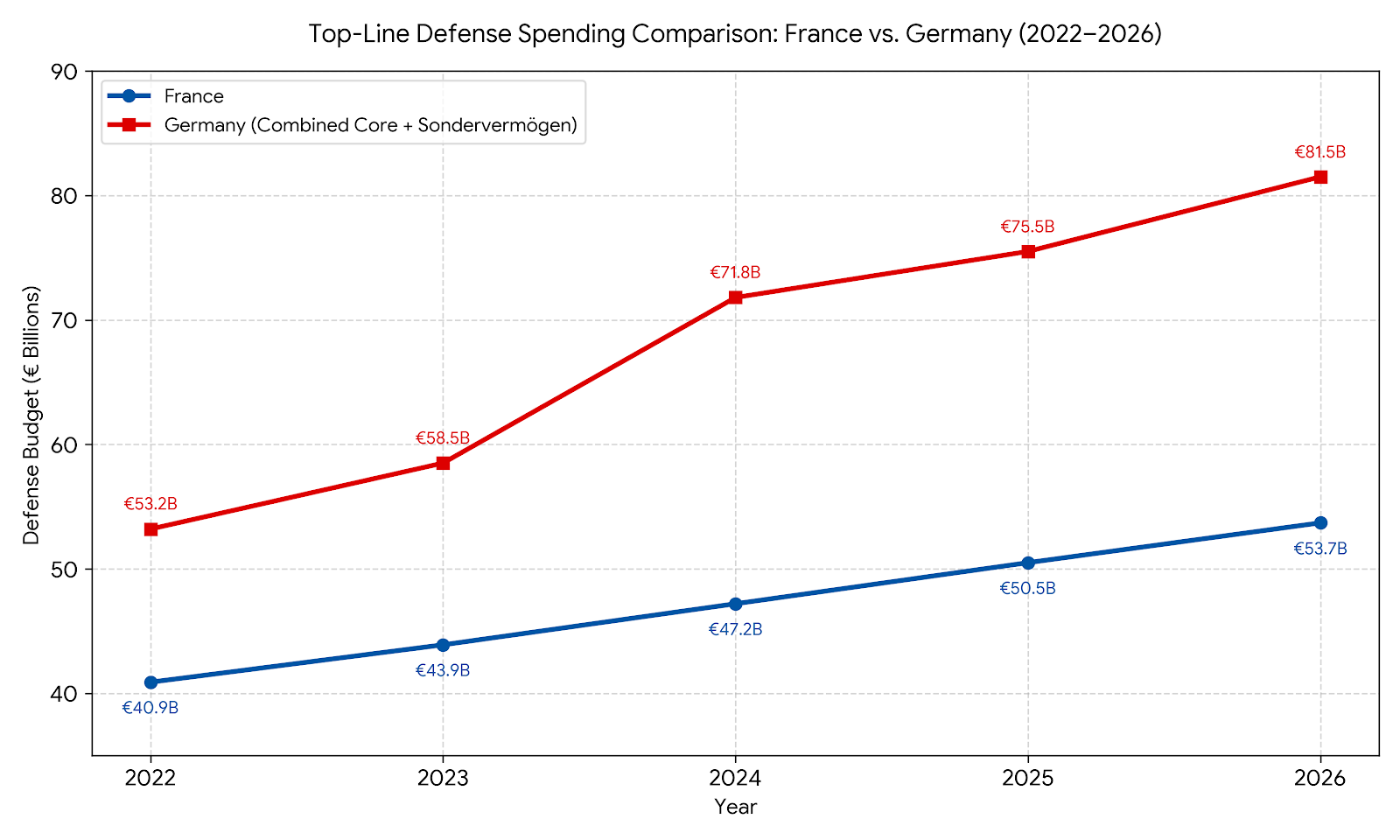
Lost in the many factors involving the breakup of the FCAS partnership was the shift in the budgetary balance of power between Paris and Berlin.
For decades, Germany was a laggard in defense investment as it focused on its post-Cold War reunification, demilitarizing the Bundeswehr (the so-called post-Cold War Dividend), soft diplomacy measures, and strict financial governance under its constitutional debt brake (Schuldenbremse) that capped annual Federal budgetary structural net deficits at 0.35% of GDP.
Now under a revised approach towards defense investment in the wake of Russia’s invasion of Ukraine and the implementation of off-budget "special funds" (Sondervermögen) and 2025 reforms uncapping defense spending from the debt brake, Germany is leapfrogging the rest of Europe as a defense spender. The anticipated defense budget for 2030 is slated to reach EUR184-190 billion ($209-$217 billion) under Berlin’s medium-term financial framework.
A Germany assuming a position at the head of the pack of European nations in military expenditure is going to be a different type of defense industrial partner than the Berlin of a decade ago. It will require more from its own domestic defense sector and in return invest in it accordingly. The FCAS program – tied up in differing military requirements and export controls and outlooks, industrial disputes and protectionism – is symbolic of a shift in Europe’s traditional military power dynamic.
The numbers tell the story.